
How Digital Transformation Is Reshaping Logistics Operations
The logistics industry is undergoing a fundamental shift. From AI-driven route optimization to real-time shipment tracking, digital tools are enabling faster, more efficient supply chain operations.
The Digital Shift in Logistics
Global supply chains are more complex than ever. With rising customer expectations, volatile demand patterns, and increasing regulatory pressures, logistics operators can no longer rely on spreadsheets and manual coordination. Digital transformation is not a luxury — it is the foundation of competitive advantage in modern freight and supply chain management.
At WowTruck, we have seen firsthand how technology adoption separates industry leaders from the rest. Companies that invest in digital infrastructure reduce operational costs by 15–25% while improving delivery reliability and customer satisfaction simultaneously.
Key Technologies Driving Change
1. AI-Powered Route Optimization
Artificial intelligence analyses historical shipment data, traffic patterns, weather conditions, and vehicle capacity to generate optimal routing in real time. Unlike static routing tools, AI systems learn continuously — every completed delivery improves future predictions. For fleet operators managing hundreds of daily dispatches, this translates into measurable fuel savings, reduced transit times, and better asset utilization.
2. Real-Time Visibility Platforms
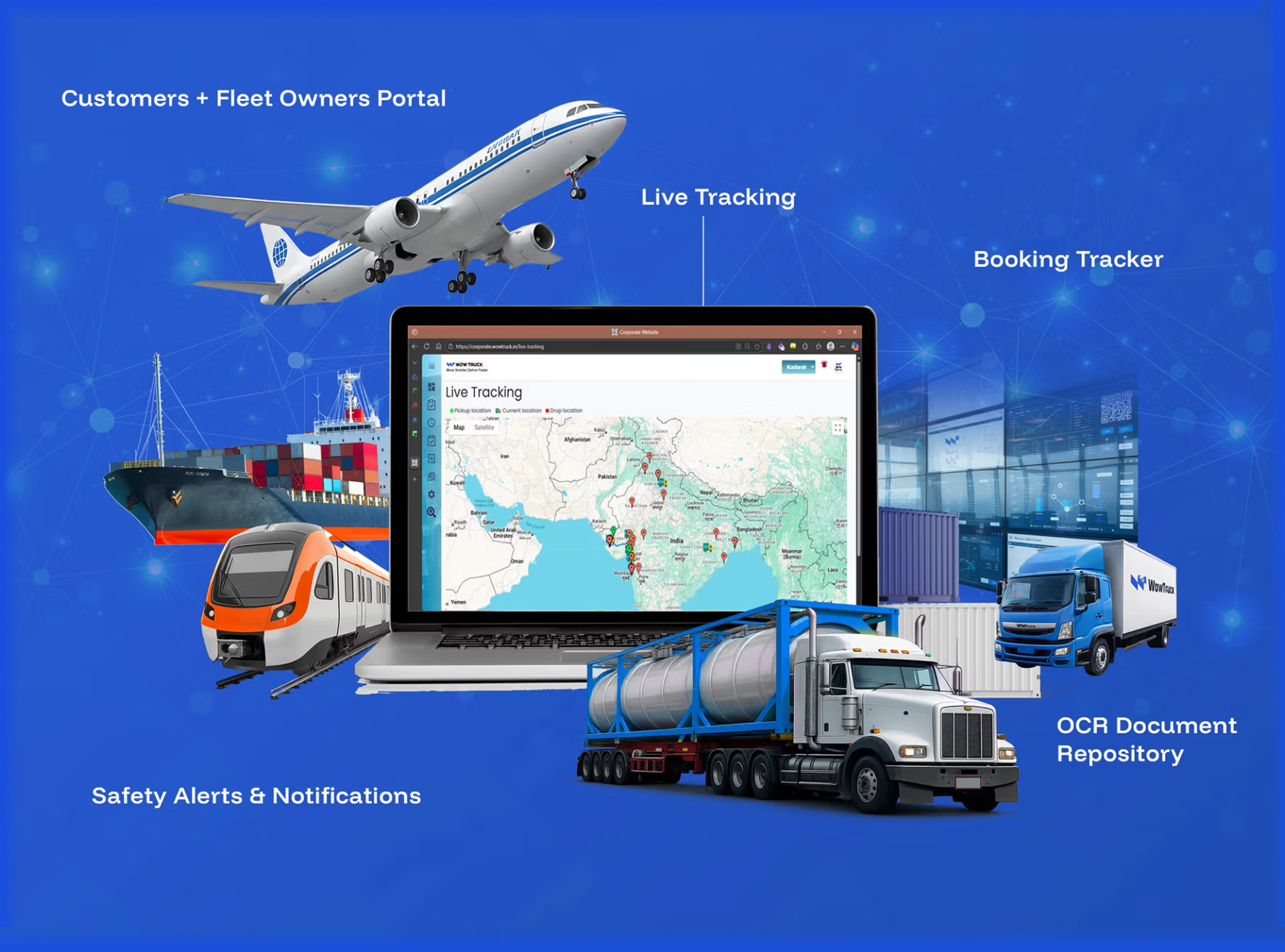
End-to-end visibility has become a non-negotiable requirement for shippers and consignees alike. Modern Transport Management Systems (TMS) provide live GPS tracking, automated milestone updates, and exception alerts that trigger before problems escalate. WowTruck's integrated tracking platform gives stakeholders a single pane of glass across all carrier partners, eliminating the information fragmentation that plagues multi-vendor logistics operations.
3. Digital Documentation & ePOD
Paper-based proof of delivery, manual invoicing, and physical document archives are rapidly being replaced by electronic alternatives. Digital proof of delivery (ePOD) with photo capture, GPS-stamped timestamps, and electronic signatures accelerates the billing cycle, reduces disputes, and creates an auditable trail that simplifies compliance. For e-commerce and FMCG operators handling thousands of daily deliveries, the efficiency gains compound quickly.
4. Predictive Analytics & Demand Sensing
Rather than reacting to demand spikes after they occur, predictive analytics uses market signals, seasonal patterns, and real-time order data to anticipate volume changes days or weeks in advance. This allows logistics operators to pre-position inventory, scale carrier capacity proactively, and avoid the costly premium freight charges that come with last-minute scrambling.
Implementation: Where to Start
Digital transformation does not require a complete technology overhaul on day one. The most successful implementations follow a phased approach: start with visibility (tracking and dashboards), then layer on optimization (route planning, carrier selection), and finally advance to prediction (demand forecasting, autonomous exception handling).
The critical success factor is data quality. Every digital tool is only as good as the data feeding it. Before investing in AI or analytics platforms, ensure your master data — locations, vehicle specifications, carrier rates, delivery windows — is clean, consistent, and centrally managed.
The Bottom Line
Digital transformation in logistics is not about adopting technology for its own sake. It is about building the operational infrastructure that enables speed, reliability, and scale. Companies that treat technology as a strategic enabler — rather than a cost center — will define the next era of supply chain excellence.
At WowTruck, we partner with businesses across industries to implement technology-driven logistics solutions that deliver measurable results from day one. Whether you are managing domestic freight or complex cross-border supply chains, the right digital foundation makes all the difference.